
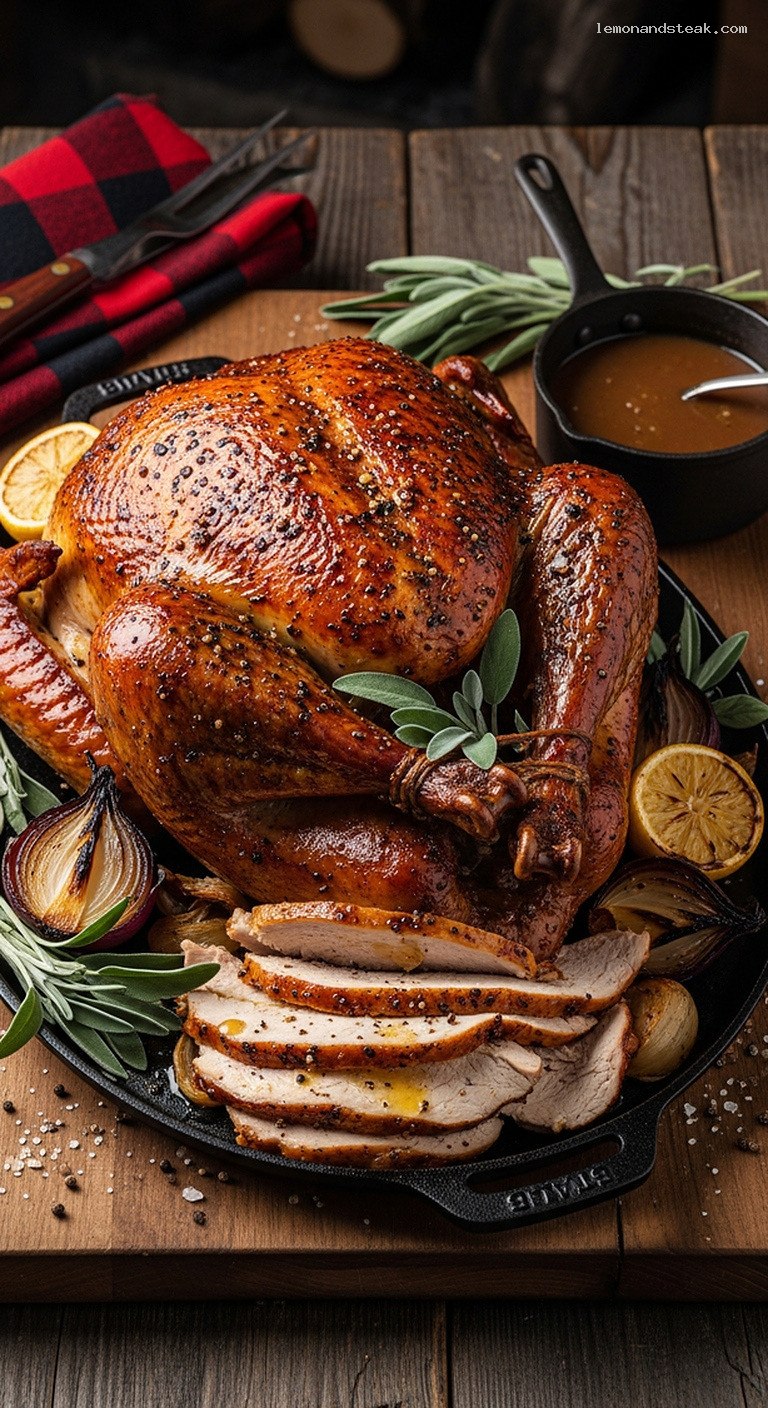
Smoked-Salt Sage & Brown Sugar Roasted Turkey (No Smoker Needed)
Quick Recipe Version (TL;DR)
Quick Ingredients
- 1 whole turkey (10–12 lb), thawed, giblets removed
- 3 tbsp smoked sea salt (fine or crushed)
- 2 tbsp packed dark brown sugar (for rub)
- 2 tsp black pepper, 2 tsp smoked paprika
- 1.5 tsp garlic powder, 1 tsp onion powder
- 1 tsp dried thyme, 1 tsp dried rubbed sage
- 1 cup (2 sticks) unsalted butter, softened
- 2 tbsp packed dark brown sugar (for butter)
- 2 tbsp fresh sage (finely chopped)
- 1 tbsp each fresh thyme and rosemary (chopped)
- 1 tbsp olive oil, 1 tbsp lemon zest
- 1 onion, 1 lemon, 1 head garlic, fresh herb sprigs (optional, for cavity)
- 1/4 cup flour + 2–3 cups low-sodium broth (optional gravy)
Do This
- 1. Pat turkey very dry, remove giblets, and let sit at room temp 30 minutes.
- 2. Mix smoked salt, brown sugar, pepper, paprika, garlic, onion, thyme, and sage for the dry rub.
- 3. Mash butter with brown sugar, fresh sage, thyme, rosemary, olive oil, and lemon zest.
- 4. Loosen turkey skin; spread half the butter under the skin, the rest on top. Sprinkle dry rub all over, including cavity.
- 5. Stuff cavity with onion, garlic, lemon, and herb sprigs if using. Roast at 425°F for 20 minutes, then at 325°F until thickest part of breast and thigh reach 165°F (about 2–2.5 hours more).
- 6. Tent loosely with foil if browning too quickly. Rest turkey 30 minutes before carving. Make gravy from pan drippings if desired.
Why You’ll Love This Recipe
- Deep smoky flavor from smoked salt and paprika without needing a smoker or special equipment.
- Brown sugar and butter create a beautifully caramelized, crisp skin with a sweet-smoky balance.
- Fresh sage and herbs bring that comforting homestyle holiday aroma to your whole kitchen.
- Flexible method: works for holidays, Sunday dinners, and makes fantastic leftovers for sandwiches and soups.
Grocery List
- Produce: 1 onion, 1 lemon, 1 head garlic, fresh sage, fresh thyme, fresh rosemary (optional but recommended)
- Dairy: Unsalted butter (1 cup / 2 sticks)
- Pantry: Whole turkey (10–12 lb), smoked sea salt, dark brown sugar, black pepper, smoked paprika, garlic powder, onion powder, dried thyme, dried rubbed sage, olive oil, all-purpose flour, low-sodium chicken or turkey broth
Full Ingredients
For the Turkey
- 1 whole turkey, 10–12 lb (4.5–5.5 kg), thawed if frozen, giblets and neck removed
- Paper towels for drying the skin
Smoky Brown Sugar Dry Rub
- 3 tbsp smoked sea salt, fine or crushed (use less if your brand is very strong)
- 2 tbsp packed dark brown sugar
- 2 tsp freshly ground black pepper
- 2 tsp smoked paprika
- 1.5 tsp garlic powder
- 1 tsp onion powder
- 1 tsp dried thyme
- 1 tsp dried rubbed sage
Smoked-Sage Brown Sugar Butter
- 1 cup (2 sticks / 225 g) unsalted butter, softened to room temperature
- 2 tbsp packed dark brown sugar
- 2 tbsp fresh sage leaves, finely chopped
- 1 tbsp fresh thyme leaves, chopped
- 1 tbsp fresh rosemary leaves, chopped (optional but delicious)
- 1 tbsp olive oil
- 1 tbsp finely grated lemon zest (about 1 lemon)
- Optional: 1/2 tsp liquid smoke for extra smokiness (only if you enjoy strong smoke flavor)
Optional Aromatics for the Cavity
- 1 small onion, peeled and quartered
- 1 lemon, halved
- 1 head garlic, halved crosswise
- 3–4 sprigs fresh sage, thyme, and/or rosemary
Optional Pan Gravy
- Pan drippings from the roasted turkey (strained)
- 1/4 cup all-purpose flour
- 2–3 cups low-sodium chicken or turkey broth (as needed for desired thickness)
- Salt and black pepper, to taste
Step-by-Step Instructions
Step 1: Thaw, prep, and dry the turkey
If your turkey is frozen, thaw it safely in the refrigerator (about 24 hours per 4–5 lb of turkey). When ready to cook, remove the turkey from the fridge. Take out the neck and giblet packet from the cavity and reserve for stock or discard if you are not using them.
Pat the turkey very dry inside and out with plenty of paper towels. Dry skin is the key to a crisp, beautifully browned exterior. Set the turkey on a roasting rack in a large roasting pan, breast side up, and let it sit at room temperature for about 30 minutes while you prepare the rub and butter. This takes the chill off so it cooks more evenly.
Step 2: Mix the smoky brown sugar dry rub
In a small bowl, combine the smoked sea salt, dark brown sugar, black pepper, smoked paprika, garlic powder, onion powder, dried thyme, and dried sage. Stir with a spoon or whisk until completely uniform, breaking up any lumps of sugar or salt.
Taste a small pinch (it will be strong and salty, since this is a rub) to check the balance of smoke, sweetness, and salt. If your smoked salt is very intense, you can cut it with 1–2 tsp regular kosher salt or simply use a bit less of the rub on the turkey.
Step 3: Make the smoked-sage brown sugar butter
In a medium bowl, add the softened butter, brown sugar, chopped fresh sage, thyme, rosemary, olive oil, lemon zest, and liquid smoke if using. Mash everything together with a fork or spatula until you have a smooth, fragrant compound butter with no streaks.
The butter should be soft enough to spread easily. If it is too firm, let it sit at room temperature for another 5–10 minutes. This butter is what will keep the breast meat juicy, help the skin brown deeply, and infuse the turkey with that sweet-herby flavor.
Step 4: Season the turkey inside, under the skin, and outside
Gently loosen the skin over the breast and upper thighs: slide your fingers under the skin at the cavity end of the breast and slowly work them up toward the top, separating skin from meat without tearing. Take your time here.
Scoop about half of the smoked-sage brown sugar butter and spread it under the loosened skin, directly onto the breast and upper thigh meat, pressing from the outside to distribute it evenly. This ensures deeply seasoned, moist meat.
Rub the remaining butter all over the outside of the turkey: breast, legs, thighs, and even a little on the back. Next, sprinkle the smoky brown sugar dry rub evenly over the entire turkey, including the cavity. Use your hands to gently press it so it adheres to the buttery surface.
If using aromatics, stuff the cavity loosely with the onion quarters, lemon halves, halved garlic head, and fresh herb sprigs. Do not pack it tightly; air circulation helps the bird roast more evenly.
Step 5: Optional chill for extra-crisp skin
For the crispest, most evenly browned skin, you can do an optional dry-air chill. After seasoning, place the uncovered turkey (on its roasting rack) in the refrigerator for 4–24 hours. The surface will dry slightly, which helps it crisp in the oven and concentrate the smoky flavor.
If you do this step, remove the turkey from the refrigerator 30–45 minutes before roasting to let it lose some of the chill. If you are short on time, you can skip this chill and go straight to roasting; the turkey will still be delicious, just slightly less crisp.
Step 6: Roast the turkey for sweet-smoky caramelization
Preheat your oven to 425°F (220°C) with the rack in the lower third of the oven. Make sure the turkey is breast side up on a rack in the roasting pan.
Roast at 425°F for 20 minutes. This initial high heat jump-starts browning and sets the smoky, caramelized crust from the brown sugar and butter.
After 20 minutes, reduce the oven temperature to 325°F (165°C) without opening the door if possible. Continue roasting until a digital thermometer inserted into the thickest part of the breast and the innermost part of the thigh (without touching bone) reads 165°F (74°C). For a 10–12 lb turkey, this usually takes about 2–2.5 hours more, for a total cook time of about 2 hours 30 minutes to 2 hours 45 minutes.
Check the turkey every 30–40 minutes. If the skin is browning too fast, tent loosely with foil. If the pan is very dry, add 1/2–1 cup of water or broth to prevent burning and to create flavorful drippings for gravy. Avoid basting too often; opening the oven frequently will extend cooking time, but an occasional spoon of pan juices over the breast is fine.
Step 7: Rest, carve, and make a quick pan gravy
Once the turkey reaches 165°F in both breast and thigh, carefully remove it from the oven. Transfer the turkey (on its rack, if possible) to a carving board and tent loosely with foil. Let it rest for at least 30 minutes. Resting allows the juices to redistribute so the meat stays moist when carved.
While the turkey rests, make a simple gravy. Pour the pan drippings through a fine strainer into a measuring cup or bowl. Let the fat rise to the top and skim off most of it, reserving about 1/4 cup. Set a saucepan over medium heat and add the reserved fat. Whisk in 1/4 cup flour and cook for 1–2 minutes to form a golden roux. Slowly whisk in 2 cups of broth plus enough skimmed drippings to reach your desired flavor and thickness, letting it simmer until smooth. Adjust seasoning with salt and pepper.
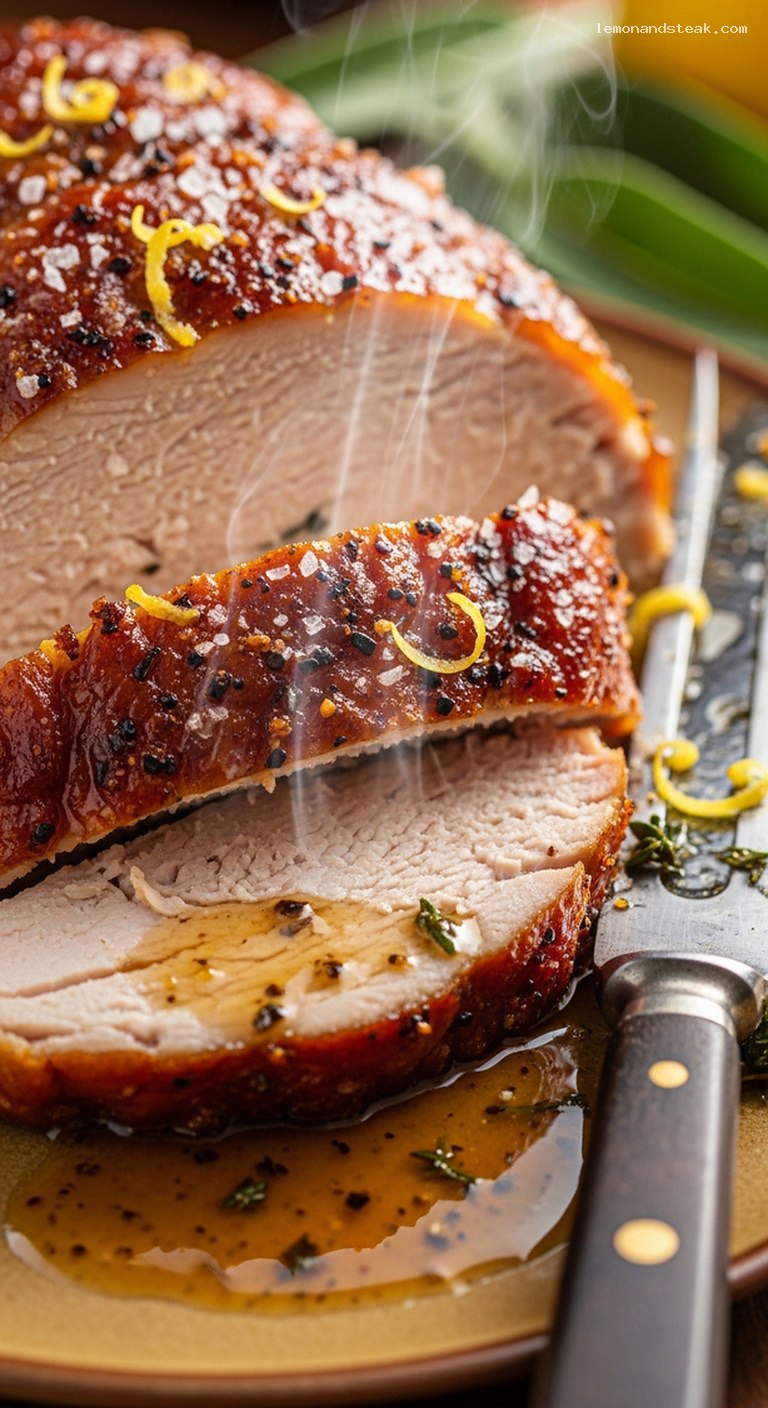
Carve the turkey: remove legs and thighs, then breasts, slicing meat against the grain. Arrange on a warm platter, spoon some of the smoky pan juices over the top, and serve with the gravy on the side.
Pro Tips
- Use a thermometer, not the pop-up timer. A digital instant-read thermometer is the most reliable way to hit 165°F without overcooking.
- Do not skip drying the skin. Excess surface moisture fights against browning. Thorough patting dry makes a big difference.
- Adjust the smoke level to your taste. Smoked salt and smoked paprika are potent; start with the recipe amount and reduce slightly next time if you prefer a milder smoke.
- Let the butter fully soften. If it is too firm, it will tear the skin instead of spreading smoothly under it.
- Resting time is non-negotiable. That 30-minute rest is when the turkey becomes juicy and sliceable instead of dry and leaky.
Variations
- Herb-forward version: Reduce brown sugar in both the rub and butter by half and double the fresh herbs (sage, thyme, rosemary) for a more savory, less sweet profile.
- Spicy-sweet twist: Add 1/2–1 tsp cayenne pepper or chipotle powder to the dry rub for gentle heat that plays nicely with the brown sugar.
- Citrus-smoke version: Add the zest of an extra lemon or an orange to the butter and tuck orange slices in the cavity for brighter citrus notes against the smoky background.
Storage & Make-Ahead
Once completely cooled, store leftover turkey meat in airtight containers in the refrigerator for up to 4 days. For longer storage, freeze carved turkey in freezer bags or containers (with as little air as possible) for up to 3 months; add a splash of broth before freezing to help keep it moist.
You can also prepare the turkey a day ahead by seasoning and buttering it, then refrigerating it uncovered overnight (Step 5). This makes roasting day much easier and improves the skin texture. Reheat leftovers gently in a covered dish with a bit of broth at 300°F (150°C) until warmed through, to avoid drying out the meat.
Nutrition (per serving)
Approximate values for 1 serving (about 6 oz roasted turkey with skin plus a small amount of gravy): 480 calories; 55 g protein; 24 g total fat; 11 g saturated fat; 10 g carbohydrates; 0.5 g fiber; 7 g sugars; 1250 mg sodium. Actual values will vary based on the exact size of your turkey, how much skin and butter you eat, and how much salt is retained after cooking.
Leave a Reply