
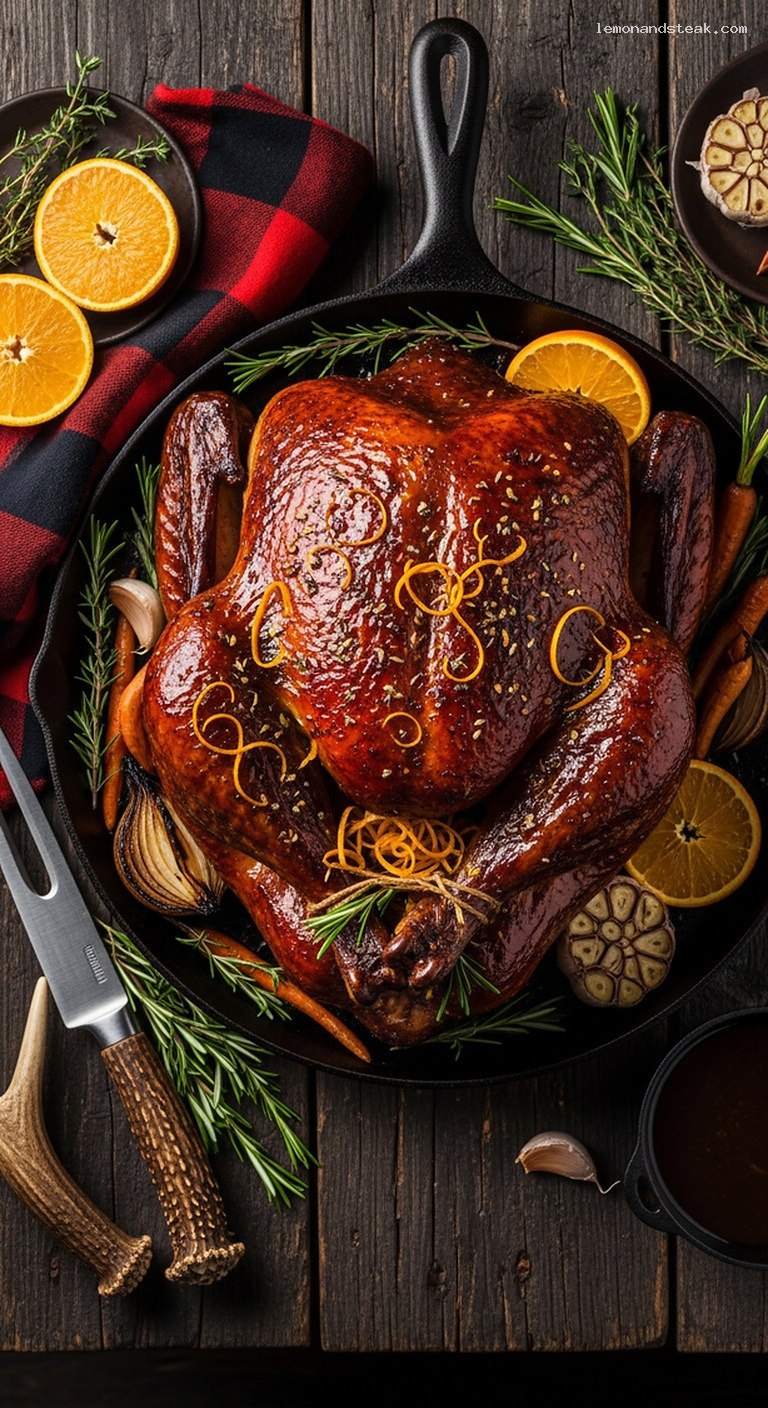
Quick Recipe Version (TL;DR)
Quick Ingredients
- 1 whole turkey, 12–14 lb, thawed and giblets removed
- 3 tbsp kosher salt, 2 tsp black pepper
- 2 tsp paprika, 1 tsp garlic powder, 1 tsp onion powder
- 1/2 tsp ground cinnamon, 1/4 tsp allspice
- 2 tbsp olive oil
- 2 oranges (zest of 2, plus 2 oranges quartered)
- 1 onion (quartered), 1 head garlic (halved), fresh thyme and rosemary
- 2 cups low-sodium chicken or turkey stock
- 1/2 cup molasses, 1/4 cup maple syrup, 1/4 cup orange juice
- 4 tbsp unsalted butter, 2 tbsp apple cider vinegar, 1 tsp Dijon mustard
- Optional gravy: 3 tbsp flour, 2–2 1/2 cups pan juices/stock
Do This
- 1. Pat turkey dry. Mix salt, pepper, and spices; rub all over and under skin. Chill uncovered 12–24 hours.
- 2. Bring turkey to room temp 45–60 minutes. Stuff cavity with orange wedges, onion, garlic, and herbs. Tuck wings, tie legs, rub with olive oil.
- 3. Place turkey on a rack in a roasting pan with carrots/celery if using; pour in 2 cups stock. Roast at 325°F (165°C) for 1 1/2–2 hours.
- 4. Simmer molasses, maple syrup, orange juice, zest, butter, vinegar, mustard, and spices until glossy and slightly thickened.
- 5. Brush turkey with glaze every 20 minutes and continue roasting 1–1 1/2 hours, until the thickest part of thigh reaches 165°F (74°C).
- 6. Tent loosely with foil and rest 30 minutes. Carve. For gravy, skim fat, whisk with flour, then whisk in drippings/stock and simmer until thickened.
Why You’ll Love This Recipe
- Deep, old-fashioned flavor: dark molasses, warm spices, and bright orange zest give the turkey a cozy, nostalgic roast-dinner taste.
- Crisp, burnished skin: the glaze creates a mahogany, lightly sticky crust while keeping the meat juicy.
- Simple techniques, big payoff: dry brining and a basic stovetop glaze are all you need for a show-stopping centerpiece.
- Built-in gravy base: the spiced, citrusy drippings make an easy, incredibly flavorful pan gravy.
Grocery List
- Produce: 2–3 oranges, 1 large yellow onion, 1 head garlic, 2 carrots, 2 celery stalks, fresh thyme, fresh rosemary
- Dairy: Unsalted butter
- Pantry: 1 whole turkey (12–14 lb), kosher salt, black pepper, molasses, maple syrup (or honey), orange juice (or extra oranges), olive oil, brown sugar (optional), apple cider vinegar, Dijon mustard, low-sodium chicken or turkey stock, all-purpose flour, paprika, smoked paprika (optional), garlic powder, onion powder, ground cinnamon, ground allspice, ground cumin (optional), cayenne pepper (optional)
Full Ingredients
For the Turkey & Spice Rub (Dry Brine)
- 1 whole turkey, 12–14 lb (5.5–6.5 kg), thawed if frozen, neck and giblets removed
- 3 tbsp kosher salt (use slightly less if using fine salt)
- 2 tsp freshly ground black pepper
- 2 tsp sweet paprika
- 1 tsp garlic powder
- 1 tsp onion powder
- 1/2 tsp ground cinnamon
- 1/4 tsp ground allspice
- 1/2 tsp smoked paprika or ground cumin (optional, for a subtle smoky note)
- 2 tbsp light brown sugar (optional, for extra sweetness in the rub)
- 2 tbsp olive oil (to rub on the skin before roasting)
For Roasting Aromatics & Pan
- 2 oranges:
- Zest of 2 oranges (for the glaze; zest before cutting)
- 2 oranges, quartered (use the zested oranges inside the turkey and/or in the pan)
- 1 large yellow onion, quartered
- 1 head garlic, halved horizontally
- 4 sprigs fresh thyme
- 4 sprigs fresh rosemary
- 2 carrots, cut into large chunks (optional, for under the turkey)
- 2 celery stalks, cut into large chunks (optional, for under the turkey)
- 2 cups low-sodium chicken or turkey stock (plus extra on hand if needed)
For the Molasses–Orange Glaze
- 1/2 cup unsulphured molasses
- 1/4 cup pure maple syrup (or honey)
- 1/4 cup freshly squeezed orange juice
- Zest of 2 oranges (from above)
- 4 tbsp (1/2 stick) unsalted butter
- 2 tbsp apple cider vinegar
- 1 tsp Dijon mustard
- 1/2 tsp ground cinnamon
- 1/2 tsp smoked paprika (or sweet paprika, if you prefer)
- Pinch cayenne pepper (optional, for gentle warmth, not heat)
- 1/2 tsp kosher salt
Optional Simple Pan Gravy
- 3 tbsp fat from turkey drippings (or unsalted butter)
- 3 tbsp all-purpose flour
- 2–2 1/2 cups combined pan drippings and extra stock
- Salt and black pepper, to taste
Step-by-Step Instructions
Step 1: Thaw and Dry-Brine the Turkey
If your turkey is frozen, thaw it in the refrigerator, allowing about 24 hours per 4–5 lb (2–2.5 kg). For a 12–14 lb turkey, that usually means 3–4 days in the fridge. Once thawed, remove the turkey from its packaging, pull out the neck and giblets from the cavities, and pat the bird very dry with paper towels.
In a small bowl, mix together the kosher salt, black pepper, paprika, garlic powder, onion powder, cinnamon, allspice, smoked paprika or cumin (if using), and brown sugar (if using). Place the turkey on a rimmed tray or in a roasting pan. Gently loosen the skin over the breasts by sliding your fingers between the skin and meat, being careful not to tear it. Rub some of the spice mixture directly onto the breast meat under the skin, then rub the rest all over the outside of the turkey and inside the cavity.
Refrigerate the turkey uncovered for at least 12 hours and up to 24 hours. This “dry brine” seasons the meat all the way through and helps the skin crisp beautifully.
Step 2: Prepare the Aromatics and Roasting Pan
About 45–60 minutes before you plan to roast, remove the turkey from the refrigerator so it can take the chill off. This helps it cook more evenly. Zest 2 oranges and reserve the zest for the glaze. Then cut the zested oranges into quarters.
Place the onion quarters, halved garlic head, a few orange wedges, and the thyme and rosemary sprigs inside the turkey cavity. Do not pack it tightly; leave space for air to circulate. If you like, tuck some extra orange wedges, onion, carrots, and celery in the bottom of your roasting pan. These will flavor the drippings and help keep the turkey elevated.
Tuck the wing tips under the body so they do not burn. Tie the legs together loosely with kitchen twine. Brush or rub the outside of the turkey all over with the olive oil. Place the turkey breast-side up on a roasting rack set inside a large, sturdy roasting pan. Pour 2 cups of stock into the pan (not over the turkey).
Step 3: Start Roasting the Turkey
Preheat your oven to 325°F (165°C), positioning a rack in the lower third to give the turkey plenty of room. Once hot, place the roasting pan with the prepared turkey into the oven, uncovered.
Roast for 1 1/2–2 hours without the glaze to let the skin start to render and crisp. Every 45 minutes or so, check the pan. If the liquids are evaporating, add a splash more stock or water to keep a thin layer in the bottom of the pan. You want those flavorful drippings, but do not let them burn.
At this stage, you do not need to baste the turkey with its own juices; that can sometimes soften the skin. Just let the dry-brined bird roast and build a golden base color while you prepare the glaze.
Step 4: Make the Molasses–Orange Glaze
While the turkey roasts, make the glaze. In a small saucepan, combine the molasses, maple syrup, orange juice, orange zest, butter, apple cider vinegar, Dijon mustard, cinnamon, smoked paprika, cayenne (if using), and salt.
Set the pan over medium-low heat. Stir frequently as the butter melts and everything comes together into a dark, shiny sauce. Let it gently simmer for 8–10 minutes, stirring often, until it has thickened slightly and coats the back of a spoon. You are aiming for a pourable but syrupy consistency, similar to warm maple syrup.
Remove from heat and set aside. The glaze will thicken a bit as it cools. If it becomes too thick to brush later, you can rewarm it with a spoonful of water or stock to loosen it.
Step 5: Glaze and Continue Roasting
After the turkey has roasted for 1 1/2–2 hours, begin checking the internal temperature with an instant-read thermometer. Insert it into the thickest part of the thigh, not touching the bone. When it reads around 120–130°F (49–54°C), it is time to start glazing.
Brush a generous layer of the warm molasses–orange glaze all over the turkey, including the legs and wings. Return the turkey to the oven. Continue roasting, brushing with more glaze every 20 minutes, until the thickest part of the thigh reaches 165°F (74°C) and the breast is about 160°F (71°C). This will typically take another 1–1 1/2 hours, depending on the exact size of your bird and your oven.
If any parts of the turkey (often the tips of the wings or the top of the breast) are browning too quickly, tent just that area loosely with a small piece of foil while the rest catches up. You want a deeply burnished, mahogany color from the molasses, not a char.
Step 6: Rest the Turkey and Make the Pan Gravy (Optional)
When the turkey reaches temperature, carefully remove the roasting pan from the oven. Transfer the turkey to a carving board or platter. Tent loosely with foil and let it rest for at least 30 minutes. Resting is crucial: it allows the juices to redistribute so the meat slices juicy and tender.
While the turkey rests, make the gravy if you like. Carefully pour the pan drippings through a strainer into a heatproof measuring cup or bowl. Let them sit for a few minutes so the fat rises to the top. Skim off about 3 tbsp of the fat and add to a medium saucepan (or use butter if you prefer). If there is not enough liquid for gravy, top up with additional stock until you have 2–2 1/2 cups total.
Set the saucepan with the fat over medium heat. Whisk in the flour and cook, whisking constantly, for 2–3 minutes until it turns a light golden color and smells nutty. Slowly pour in the reserved pan juices and stock, whisking constantly to avoid lumps. Bring to a gentle simmer and cook for 5–8 minutes until thickened to your liking. Season with salt and pepper to taste. The molasses and orange from the drippings will give the gravy a beautiful depth and gentle sweetness.
Step 7: Carve and Serve
When the resting time is up, remove the foil. For the cleanest slices, first remove the legs and thighs by cutting through the joint where they meet the body. Separate drumsticks from thighs if desired. Then, cut off each whole breast half by slicing down one side of the breastbone and following the ribcage. Place each breast half on the board and slice crosswise into even pieces.
Arrange the sliced breast meat, thighs, and drumsticks on a warm platter. If you have any remaining glaze, lightly drizzle a little over the sliced meat, or warm it gently and serve on the side. Spoon some of the molasses-scented gravy into a gravy boat.
Serve the turkey hot, with extra orange wedges, fresh herb sprigs, and your favorite homestyle sides. The meat should be juicy with hints of warm spice and citrus, and the skin deep brown and gently sticky from the molasses glaze.
Pro Tips
- Use the dry brine time wisely. Start the turkey at least a day ahead so the salt and spices have time to work. This step makes the biggest difference in flavor and juiciness.
- Glaze late, not early. Molasses and maple syrup can burn if exposed to high heat too long. Waiting until the turkey is closer to done gives you a dark, glossy finish without scorching.
- Cook by temperature, not just time. Every oven and every turkey is different. An instant-read thermometer is your best friend for perfectly cooked, still-juicy meat.
- Keep the pan moist. A little stock in the roasting pan prevents burnt drippings and creates a flavorful base for gravy. If the pan looks dry, add more stock or water in 1/2-cup increments.
- Shield hotspots. If a portion of the turkey browns too fast, lightly tent just that area with foil. This keeps the skin from over-darkening while the rest of the bird catches up.
Variations
- Smoky Ranch-Style Turkey: Increase the smoked paprika in the rub and glaze to 1 tsp each, add 1/2 tsp ground cumin to the glaze, and use a splash of bourbon instead of some of the orange juice for a deeper, campfire-like flavor.
- Ginger-Molasses Turkey: Add 1–2 tsp freshly grated ginger (or 1/2 tsp ground ginger) to the glaze along with a pinch more allspice. This leans into gingerbread-like notes without being overly sweet.
- Herb-Heavy Version: Double the fresh rosemary and thyme, tuck extra sprigs under the skin, and add 1 tsp dried thyme to the rub for a more pronounced herbal backbone under the molasses and orange.
Storage & Make-Ahead
You can dry-brine the turkey 1–2 days ahead; leave it uncovered in the refrigerator for the crispiest skin. The molasses–orange glaze can be made up to 3 days in advance and stored in an airtight container in the fridge. Rewarm gently on the stove and thin with a splash of water or stock if needed before brushing on the turkey.
Leftover cooked turkey keeps well in an airtight container in the refrigerator for 3–4 days. For best texture, reheat gently in a covered dish with a splash of stock or gravy at 300°F (150°C) until warmed through, or pan-warm slices in a little butter. The gravy can be refrigerated for 3–4 days or frozen for up to 3 months; thin with a bit of stock or water when reheating if it thickens.
Nutrition (per serving)
Approximate values for one serving (about 6 oz cooked turkey with some skin and a bit of glaze, plus a spoonful of gravy): about 520 calories, 45 g protein, 24 g fat, 9 g saturated fat, 28 g carbohydrates, 0–1 g fiber, 22 g sugars, and 780 mg sodium. Actual values will vary based on the size of the turkey, how much skin and glaze each person eats, and how salty your stock and drippings are.
Leave a Reply