
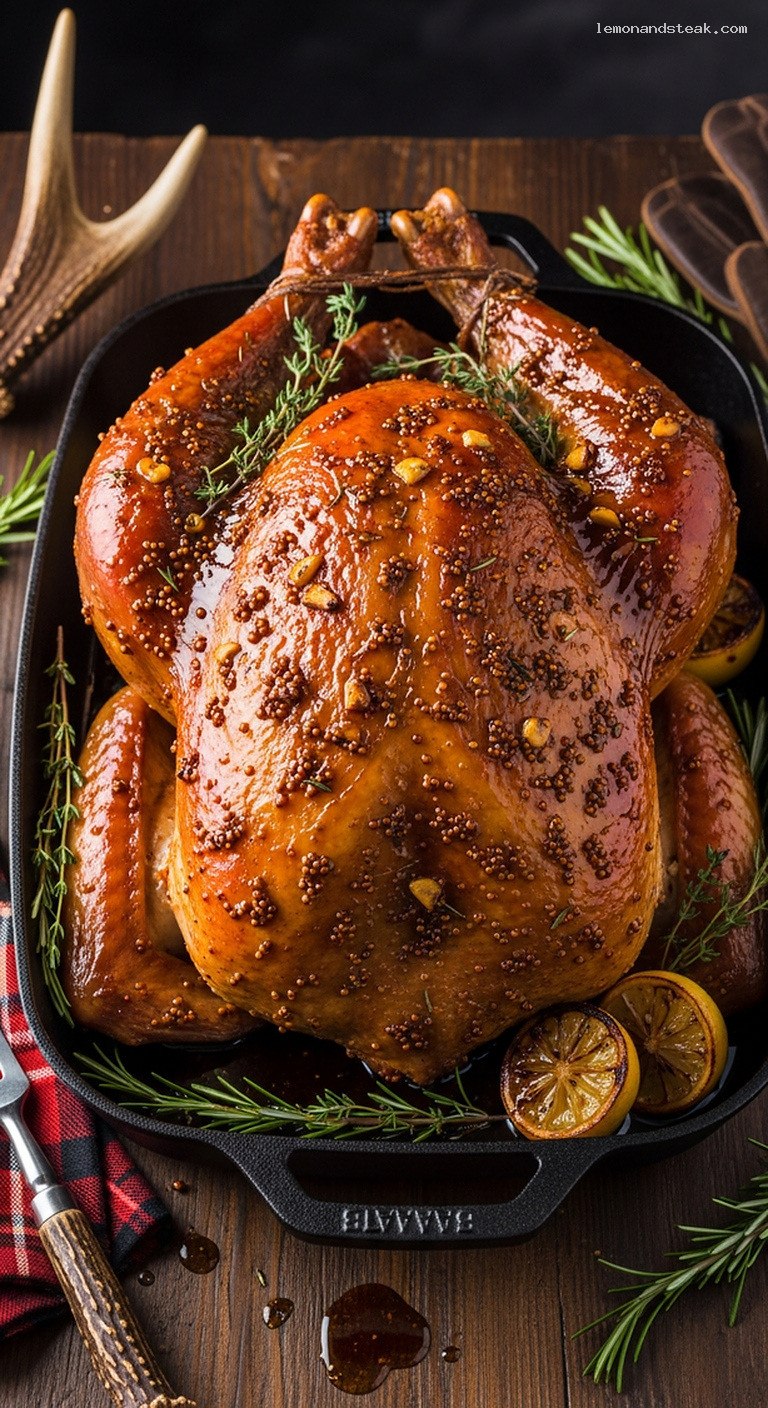
Quick Recipe Version (TL;DR)
Quick Ingredients
- 1 whole turkey, 14–16 lb (6.5–7.25 kg), thawed
- 3 tbsp kosher salt + 2 tsp black pepper
- 6 tbsp unsalted butter, softened
- 2 tbsp olive oil
- 1 large onion, quartered; 1 lemon, halved
- 1 head garlic, halved horizontally
- 6 sprigs fresh thyme + 4 sprigs fresh rosemary
- 2 cups (480 ml) low-sodium chicken or turkey broth
- 1 cup (340 g) honey
- ½ cup (120 g) Dijon mustard
- ¼ cup (60 g) whole-grain mustard
- ¼ cup (60 ml) apple cider vinegar
- 1 tsp smoked paprika + ½ tsp ground cayenne (optional)
- 4 cloves garlic, finely minced or grated
Do This
- 1. Pat turkey dry and rub all over (including under skin) with 3 tbsp kosher salt and 1 tsp pepper; refrigerate uncovered 12–24 hours for best flavor.
- 2. Preheat oven to 275°F (135°C). Stuff cavity with onion, lemon, garlic, and herbs. Rub turkey with softened butter and olive oil; season with remaining pepper.
- 3. Place turkey breast-side up on a rack in a large roasting pan. Pour broth into pan. Roast at 275°F (135°C) for 3½–4½ hours, until breast is 145–150°F (63–66°C).
- 4. While turkey roasts, simmer honey, Dijon, whole-grain mustard, vinegar, minced garlic, smoked paprika, and cayenne (if using) 5–7 minutes until slightly thickened.
- 5. Increase oven to 425°F (220°C). Brush turkey generously with honey-mustard lacquer. Roast 20–35 minutes more, brushing once or twice, until skin is deep golden and thickest part of breast and thigh reach 160–165°F (71–74°C).
- 6. Tent loosely with foil and rest 30–45 minutes before carving. Warm remaining glaze and serve alongside sliced turkey.
Why You’ll Love This Recipe
- Slow baking keeps the meat incredibly juicy while giving you shatteringly crisp, lacquered skin.
- The honey-mustard glaze is tangy, slightly sweet, and sticky enough to cling to every slice.
- Minimal fuss: mostly hands-off roasting with simple pantry ingredients.
- Make-ahead friendly: the dry brine, glaze, and aromatics can be prepped in advance.
Grocery List
- Produce: 1 large yellow onion, 1 lemon, 1 head garlic, 4 cloves garlic (extra), fresh thyme, fresh rosemary
- Dairy: Unsalted butter
- Pantry: Whole turkey, kosher salt, black pepper, olive oil, honey, Dijon mustard, whole-grain mustard, apple cider vinegar, smoked paprika, cayenne pepper (optional), low-sodium chicken or turkey broth
Full Ingredients
Turkey & Dry Brine
- 1 whole turkey, 14–16 lb (6.5–7.25 kg), completely thawed if previously frozen
- 3 tbsp kosher salt (use less if your turkey is pre-brined; see notes)
- 2 tsp freshly ground black pepper, divided
Aromatics for Cavity & Roasting Pan
- 1 large yellow onion, peeled and quartered
- 1 lemon, halved
- 1 head garlic, halved horizontally
- 6 fresh thyme sprigs
- 4 fresh rosemary sprigs
- 6 tbsp unsalted butter, softened to room temperature
- 2 tbsp olive oil
- 2 cups (480 ml) low-sodium chicken or turkey broth (plus more as needed to keep pan from drying)
Honey-Mustard Lacquer (Glaze)
- 1 cup (340 g) honey
- ½ cup (120 g) Dijon mustard
- ¼ cup (60 g) whole-grain mustard
- ¼ cup (60 ml) apple cider vinegar
- 4 cloves garlic, finely minced or grated
- 1 tsp smoked paprika
- ½ tsp ground cayenne pepper (optional, for gentle heat)
- ½ tsp fine sea salt (or to taste)
- ¼ tsp freshly ground black pepper
Optional For Serving
- Fresh thyme and rosemary sprigs for garnish
- Coarse sea salt for finishing
- Extra warmed honey-mustard glaze on the side
Step-by-Step Instructions
Step 1: Dry-brine the turkey
Ensure the turkey is fully thawed: a 14–16 lb (6.5–7.25 kg) bird usually needs 3–4 days in the refrigerator. Remove the giblets and neck from the cavity and pat the turkey very dry with paper towels, inside and out.
Sprinkle 3 tbsp kosher salt and 1 tsp black pepper evenly over the entire surface of the turkey, including the back, legs, and any folds. Gently loosen the skin over the breasts with your fingers and rub a little salt directly onto the meat under the skin. Place the turkey on a rack set in a roasting pan or on a rimmed baking sheet to catch drips.
Refrigerate uncovered for at least 12 hours and up to 24 hours. This dry brine seasons the meat all the way through and helps the skin crisp. If your turkey is labeled “enhanced,” “pre-brined,” or “self-basting,” reduce the salt to 1½–2 tbsp.
Step 2: Prep the turkey and aromatics
Remove the turkey from the fridge 45–60 minutes before roasting to take off the chill. Preheat the oven to 275°F (135°C) with a rack positioned in the lower third.
In a small bowl, mix the softened butter with ½ tsp black pepper. Pat the turkey dry again if needed. Carefully loosen the skin over the breasts and thighs with your fingers and smear some of the butter under the skin directly onto the meat. Rub the remaining butter all over the outside of the turkey, then drizzle with 2 tbsp olive oil to help with browning.
Stuff the cavity loosely with the onion quarters, lemon halves, halved garlic head, and the thyme and rosemary sprigs. Tuck the wing tips behind the bird to prevent burning. If you like, tie the legs loosely together with kitchen twine for a neater shape.
Place the turkey breast-side up on a sturdy roasting rack set inside a large roasting pan. Pour 2 cups (480 ml) broth into the bottom of the pan to keep drippings from burning and to create flavorful steam.
Step 3: Slow-bake the turkey low and slow
Transfer the roasting pan to the oven and bake at 275°F (135°C). Plan on about 11–13 minutes per pound at this low temperature, but use a thermometer rather than the clock. For a 14–16 lb turkey, this first stage will typically take 3½–4½ hours.
About every hour, quickly open the oven and check that there is at least ½ inch (1.25 cm) of liquid in the bottom of the pan; add a splash of extra broth or water if it looks dry. Avoid basting the turkey with the pan juices at this stage; leaving the skin relatively dry helps it crisp later.
Begin checking the internal temperature after 3 hours. Insert an instant-read thermometer into the thickest part of the breast (without touching bone). When the breast reaches 145–150°F (63–66°C) and the thighs are 155–160°F (68–71°C), move on to the glazing stage.
Step 4: Make the honey-mustard lacquer
While the turkey slow-bakes, prepare the glaze. In a small saucepan, combine the honey, Dijon mustard, whole-grain mustard, apple cider vinegar, minced garlic, smoked paprika, cayenne (if using), sea salt, and black pepper.
Bring to a gentle simmer over medium-low heat, stirring often. Cook for 5–7 minutes until slightly thickened and glossy. It should be pourable but coat the back of a spoon. Keep a close eye on it, as honey can scorch if the heat is too high.
Remove from the heat. The glaze will thicken a bit more as it cools. Set aside, keeping it warm on the lowest heat setting or covered near the stove so it stays fluid for brushing. If it becomes too thick, thin it with 1–2 tsp hot water or broth.
Step 5: Lacquer and finish roasting at high heat
When the turkey’s internal temperature reaches the target range for the low-and-slow phase, remove the pan from the oven and increase the oven temperature to 425°F (220°C). Let the turkey stand at room temperature while the oven heats, about 10–15 minutes.
Using a heatproof brush, coat the turkey generously with the warm honey-mustard lacquer, covering every exposed surface. Be careful: the pan drippings are very hot. If any areas seem at risk of burning (tips of wings or drumsticks), cover them loosely with small pieces of foil.
Return the turkey to the hot oven and roast at 425°F (220°C) for 20–35 minutes, rotating the pan once, until the skin is deep golden-brown, shiny, and sticky. Brush on another light coat of glaze halfway through this final roast.
Begin checking the internal temperature after 20 minutes. The thickest part of the breast and thigh should reach 160–165°F (71–74°C). If the glaze is dark enough but the turkey is not yet at temperature, loosely tent the bird with foil and continue roasting until done.
Step 6: Rest the turkey
Transfer the turkey (still on the rack) to a cutting board or rimmed baking sheet. Tent loosely with foil, leaving a few gaps for steam to escape so the skin stays somewhat crisp.
Let the turkey rest for 30–45 minutes. This rest is essential: it allows the juices to redistribute so the meat slices cleanly and stays moist. During this time, you can skim excess fat from the pan drippings to make gravy, and gently rewarm any remaining glaze.
Step 7: Carve and serve with extra glaze
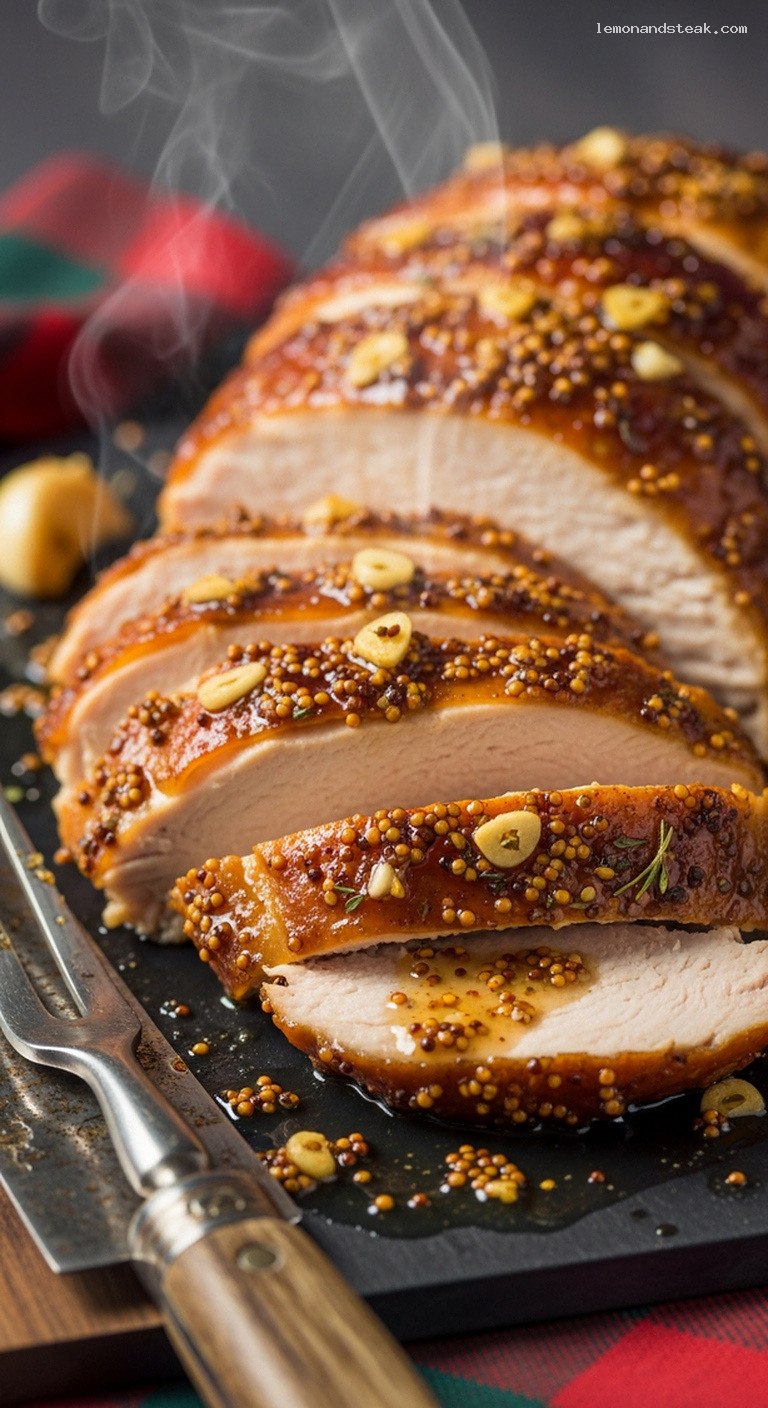
To carve, remove the legs by cutting through the joints where the thighs meet the body, then separate drumsticks from thighs. Remove the wings. Slice the breast meat off each side in large lobes, then cut crosswise into even slices.
Arrange the sliced breast meat, thighs, and drumsticks on a warm platter. Spoon a little of the warm honey-mustard lacquer over the top or brush lightly so it looks glossy and inviting. Garnish with fresh herb sprigs and a sprinkle of coarse sea salt if desired.
Serve immediately, passing any remaining warm glaze at the table for drizzling over individual portions. The combination of juicy slow-baked meat and the tangy, sticky honey-mustard crust is especially good with simple sides like roasted potatoes, green beans, or a crisp salad.
Pro Tips
- Start with a dry bird: The drier the skin before it goes in the oven, the crisper your lacquered crust will be. Pat very dry after brining.
- Thermometer over timer: Ovens vary. An instant-read thermometer is the most reliable way to avoid overcooking and keep the white meat juicy.
- Glaze late to prevent burning: Honey burns easily. Only apply the honey-mustard lacquer once the turkey is nearly cooked and the oven is hot for that final blast of color.
- Shield delicate spots: If wings or drumstick tips brown too quickly, cover them loosely with foil while the rest of the bird catches up.
- Use the drippings: The mix of pan juices and a bit of the honey-mustard glaze makes a fantastic base for gravy or a simple jus.
Variations
- Spicy Maple-Mustard Turkey: Swap half the honey for pure maple syrup and double the cayenne. Add 1 tsp chili flakes to the glaze for a sweet-heat kick.
- Herb and Citrus Lacquer: Add 1 tbsp finely chopped fresh thyme and rosemary plus the zest of 1 lemon to the glaze for a brighter, more aromatic finish.
- Smoky Barbecue Twist: Replace smoked paprika with 1 tbsp of your favorite smoked barbecue rub and use a smoky mustard if available. Great if you finish the turkey in a grill or smoker.
Storage & Make-Ahead
Leftover turkey keeps well in an airtight container in the refrigerator for 3–4 days. For longer storage, freeze sliced meat in freezer bags (with as much air removed as possible) for up to 2–3 months; thaw overnight in the fridge.
To reheat, place slices in a covered baking dish with a splash of broth and a spoonful of leftover glaze, then warm at 300°F (150°C) until just heated through. Avoid high heat, which can dry the meat out.
For make-ahead prep, you can dry-brine the turkey up to 24 hours in advance and prepare the honey-mustard lacquer up to 3 days ahead. Store the glaze in the refrigerator and rewarm gently to loosen before brushing on. You can also chop the aromatics (onion, garlic, herbs) a day ahead and keep them covered in the fridge.
Nutrition (per serving)
Approximate values for 1 serving (about 6 oz / 170 g cooked turkey with some skin and glaze, based on 12 servings): about 520 calories; 29 g protein; 24 g fat; 34 g carbohydrates; 30 g sugars; 1 g fiber; 980 mg sodium. Actual values will vary depending on the exact size of your turkey, how much skin is eaten, and how much glaze you use.
Leave a Reply