
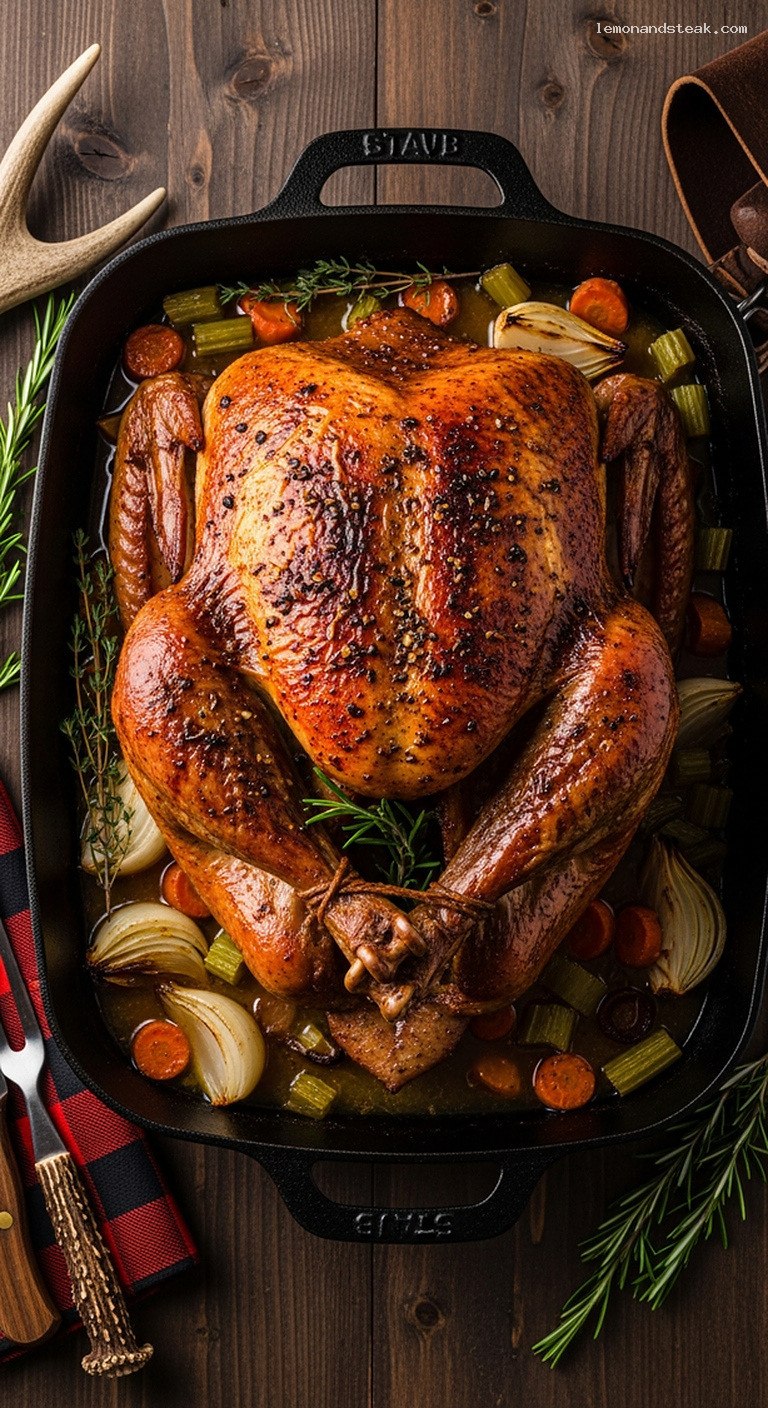
Quick Recipe Version (TL;DR)
Quick Ingredients
- 1 (12–14 lb) whole turkey, thawed
- 1 gallon apple cider + 1 gallon water
- 1 cup kosher salt, 1/2 cup brown sugar
- 1 onion, 1 orange, 1 apple, 1 head garlic, 3 bay leaves
- Fresh thyme and rosemary, black peppercorns
- 1 cup (2 sticks) unsalted butter, softened
- 2 tsp ground cinnamon, 1 tsp nutmeg, 1/2 tsp cloves
- 2 tsp kosher salt, 1 tsp black pepper, 1 tsp smoked paprika
- 2 onions, 3 carrots, 3 celery stalks for roasting bed
- 2–3 cups low-sodium chicken or turkey stock
- 2 tbsp all-purpose flour (for optional gravy)
Do This
- 1. Make brine: Simmer cider, salt, sugar, and aromatics until dissolved, cool completely, then submerge turkey 12–24 hours in the refrigerator.
- 2. Mix spiced butter: Combine softened butter with cinnamon, nutmeg, cloves, paprika, salt, pepper, and chopped herbs.
- 3. Dry turkey well, stuff cavity with onion, apple, and orange; loosen skin and rub spiced butter under and over skin.
- 4. Place turkey on a bed of chopped onion, carrot, and celery in a roasting pan; pour 2 cups stock into the pan.
- 5. Roast at 425°F (220°C) for 30 minutes, then reduce to 325°F (165°C) and roast 2 1/2–3 hours, basting occasionally.
- 6. Turkey is done at 165°F (74°C) in the thickest part of thigh; tent with foil and rest 30–40 minutes.
- 7. Make pan gravy by simmering strained drippings with a little flour and extra stock until silky; carve and serve with the spiced, cider-scented turkey.
Why You’ll Love This Recipe
- Apple cider brine keeps the turkey incredibly juicy and infuses it with gentle sweetness and fall aroma.
- A cozy spiced butter rub with cinnamon, cloves, and nutmeg gives the skin deep color and warm holiday flavor.
- Step-by-step instructions make roasting a whole turkey feel manageable, even for newer home cooks.
- The pan drippings transform easily into a rich, cider-scented gravy that tastes like autumn in a bowl.
Grocery List
- Produce: 4 onions, 1 head garlic, 1 orange, 1 apple, 3 carrots, 3 celery stalks, fresh thyme, fresh rosemary
- Dairy: 1 cup (2 sticks) unsalted butter
- Pantry: 1 (12–14 lb) turkey, 1 gallon apple cider, chicken or turkey stock, kosher salt, brown sugar, black peppercorns, bay leaves, ground cinnamon, ground nutmeg, ground cloves, smoked paprika, all-purpose flour, cooking oil or extra butter
Full Ingredients
Cider Brine
- 1 (12–14 lb) whole turkey, thawed if frozen (neck and giblets removed)
- 1 gallon apple cider
- 1 gallon cold water (plus more as needed to fully submerge turkey)
- 1 cup kosher salt (use 3/4 cup if using fine sea salt)
- 1/2 cup packed brown sugar (light or dark)
- 1 large onion, quartered
- 1 orange, sliced
- 1 head garlic, halved crosswise
- 3 bay leaves
- 1 tablespoon whole black peppercorns
- 4 sprigs fresh thyme
- 4 sprigs fresh rosemary
- Ice, as needed, to cool brine quickly (about 2–3 cups)
Spiced Butter Rub
- 1 cup (2 sticks / 225 g) unsalted butter, very soft but not melted
- 2 teaspoons ground cinnamon
- 1 teaspoon ground nutmeg
- 1/2 teaspoon ground cloves
- 1 teaspoon smoked paprika (or sweet paprika)
- 2 teaspoons kosher salt
- 1 teaspoon freshly ground black pepper
- 1 tablespoon fresh thyme leaves, finely chopped
- 1 tablespoon fresh rosemary leaves, finely chopped
For Roasting the Turkey
- 2 large onions, peeled and thickly sliced
- 3 carrots, cut into large chunks
- 3 celery stalks, cut into large chunks
- 1 small apple, quartered (for cavity)
- 1/2 orange, quartered (for cavity)
- 1–2 tablespoons neutral oil or melted butter (for brushing pan vegetables, optional)
- 2–3 cups low-sodium chicken or turkey stock (plus more as needed to keep some liquid in the pan)
- Kitchen twine for trussing (optional but helpful)
- Aluminum foil for tenting
Simple Cider Pan Gravy (Optional but Recommended)
- Pan drippings and browned vegetables from the roasting pan
- 2 tablespoons unsalted butter (if needed)
- 2 tablespoons all-purpose flour
- 1–2 cups chicken or turkey stock, plus a splash (2–4 tablespoons) apple cider if desired
- Salt and freshly ground black pepper, to taste
Step-by-Step Instructions
Step 1: Prepare the cider brine
In a large stockpot, combine the apple cider, kosher salt, and brown sugar. Add the quartered onion, sliced orange, halved head of garlic, bay leaves, black peppercorns, thyme sprigs, and rosemary sprigs. Place the pot over medium heat and bring the mixture just to a simmer, stirring occasionally, until the salt and sugar are fully dissolved, about 5–7 minutes. Remove from heat.
Add about 2–3 cups of ice and enough cold water (from the 1 gallon) to bring the total liquid to roughly 2 gallons. Stir and let the brine cool to room temperature, then refrigerate until completely cold. Never add raw turkey to warm brine; it should be thoroughly chilled before proceeding.
Step 2: Brine the turkey
Place the thawed turkey in a very large nonreactive container, brining bag, or clean food-safe bucket. Pour the cold cider brine over the turkey, adding any remaining cold water as needed so the bird is fully submerged. If it wants to float, weigh it down with a plate. Cover and refrigerate for at least 12 hours and up to 24 hours.
Halfway through brining, flip the turkey if possible so it brines evenly. When you are ready to roast, remove the turkey from the brine, discard the brine, and pat the bird extremely dry inside and out with paper towels. This drying step is key for crispy skin.
Step 3: Make the spiced butter rub
About 1 hour before you plan to roast, take the butter out of the fridge so it softens. In a medium bowl, combine the softened butter, ground cinnamon, ground nutmeg, ground cloves, smoked paprika, kosher salt, black pepper, chopped thyme, and chopped rosemary. Mix with a spoon or spatula until evenly blended and fragrant.
Taste a tiny dab (optional) to check seasoning; it should taste warmly spiced and pleasantly salty, because it needs to season the whole turkey. Adjust the salt or spices slightly if desired. Set the bowl aside at cool room temperature so the butter stays spreadable.
Step 4: Prep the turkey and roasting pan
Preheat your oven to 425°F (220°C) with the rack in the lower third. In a large roasting pan, spread the sliced onions, carrot chunks, and celery chunks to make a vegetable bed. Drizzle lightly with oil or melted butter and a small pinch of salt. This bed helps flavor the drippings and keeps the turkey elevated.
Place the dried turkey on a cutting board. Tuck the wing tips under the bird so they do not burn. Gently loosen the skin over the breasts and thighs by sliding your fingers between the skin and meat, being careful not to tear the skin. Using your hands, spread about half of the spiced butter under the skin, pressing and smoothing it as far as you can reach over the breast and thigh meat. Rub the remaining butter all over the outside of the turkey, including legs and back.
Stuff the cavity loosely with the apple and orange quarters and any extra onion pieces. Do not overpack; air should still circulate. If you like, tie the legs together with kitchen twine for a neater shape and more even cooking. Transfer the turkey, breast side up, onto the vegetable bed in the roasting pan. Pour 2 cups of stock into the bottom of the pan.
Step 5: Roast at high heat, then reduce and continue
Place the roasting pan in the preheated 425°F (220°C) oven and roast for 30 minutes. This initial high heat helps set the skin and begin browning. After 30 minutes, reduce the oven temperature to 325°F (165°C) without opening the door for too long.
Continue roasting at 325°F (165°C) for another 2 1/2–3 hours, depending on your turkey’s exact size and your oven. Every 45 minutes or so, quickly baste the turkey by spooning pan juices over the breasts and legs. If the pan looks dry at any point, add another 1/2–1 cup stock to maintain a thin layer of liquid.
If the skin is getting very dark before the turkey is done, tent the breast area loosely with foil to prevent over-browning while the legs finish cooking.
Step 6: Check for doneness and rest the turkey
Begin checking the internal temperature about 2 1/2 hours after reducing the oven temperature, or sooner if your turkey is on the smaller side. Insert an instant-read thermometer into the thickest part of the thigh, without touching the bone. The turkey is done when it reaches 165°F (74°C) in the thigh and at least 160°F (71°C) in the thickest part of the breast.
When it reaches temperature, carefully transfer the turkey to a cutting board or serving platter. Tent it loosely with foil and let it rest for 30–40 minutes. Resting allows the juices to redistribute, so the meat stays moist when carving. While the turkey rests, you can make the pan gravy.
Step 7: Make the cider pan gravy and serve
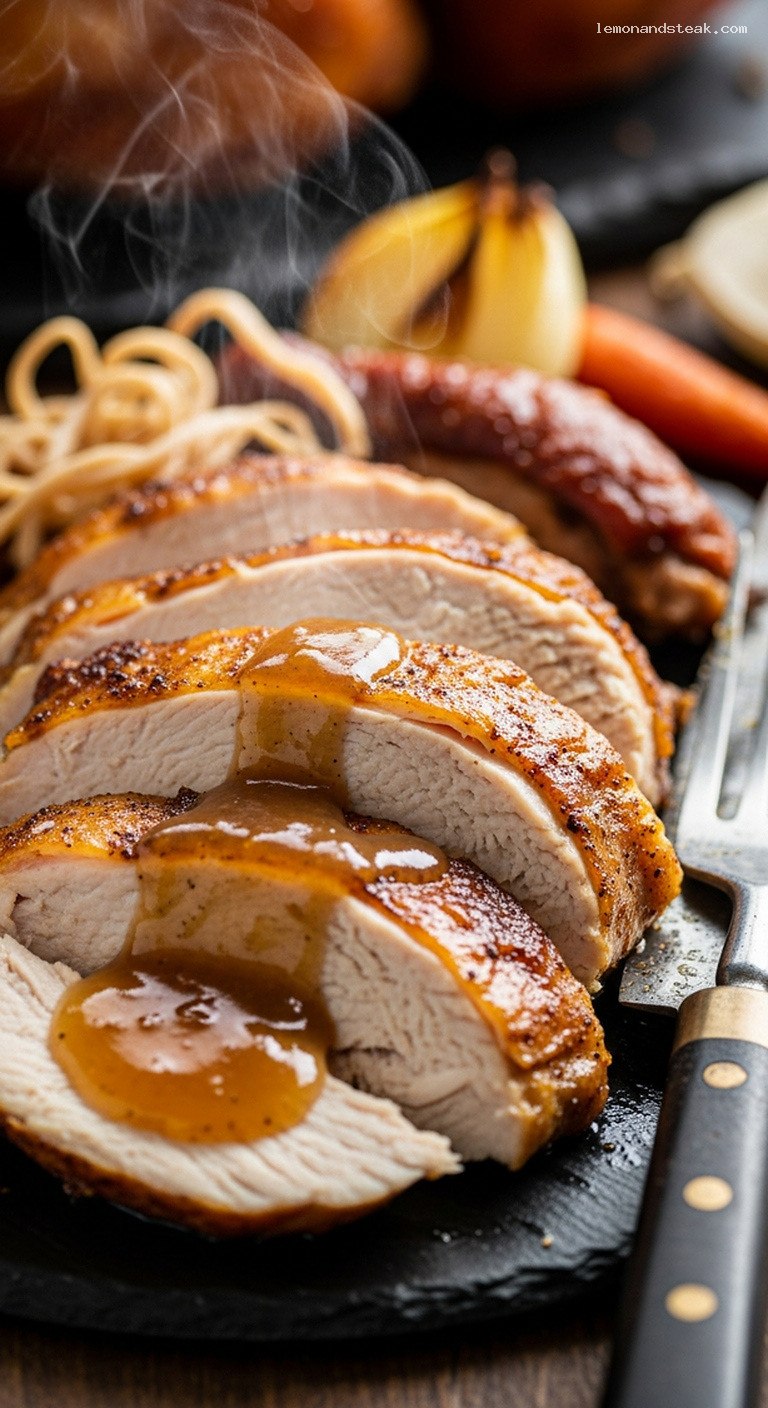
Pour the hot drippings and vegetables from the roasting pan through a fine-mesh strainer into a bowl or measuring cup. Press on the vegetables to extract flavor, then discard the solids. Skim excess fat from the surface (reserve 2 tablespoons of the fat if you like, or use butter).
Place the empty roasting pan over medium heat on the stovetop, spanning two burners if needed. Add 2 tablespoons of the skimmed fat or butter. Whisk in the flour and cook, whisking constantly, for 1–2 minutes until lightly golden and smooth. Gradually whisk in 1–2 cups of the strained drippings and enough stock to reach your desired gravy thickness. Add a splash of apple cider if you want extra fall flavor.
Simmer for 3–5 minutes, whisking, until the gravy is glossy and coats the back of a spoon. Season to taste with salt and pepper. Carve the rested turkey into slices, showing off the golden spiced skin and juicy cider-brined meat, and serve with warm gravy on the side.
Pro Tips
- Dry thoroughly after brining: Any moisture left on the skin will steam instead of crisp. Take a few extra minutes with paper towels for beautifully browned skin.
- Soften butter properly: The spiced butter should be soft enough to spread but not melted. Too soft, and it will slide right off the bird instead of clinging to the skin.
- Use a thermometer, not time alone: Every oven and turkey is different. Rely on internal temperature, especially in the thigh and breast, for perfectly cooked meat.
- Let it rest: The 30–40 minute rest might feel long, but it is essential for juicy slices and gives you time to finish sides and gravy.
- Save the carcass: After the meal, simmer the bones with leftover vegetables and herbs to make a deeply flavored turkey stock for soups and future gravies.
Variations
- Maple-cider turkey: Stir 2–3 tablespoons pure maple syrup into the spiced butter for a subtle maple note and even deeper caramelization on the skin.
- Herb-forward version: Increase the fresh thyme and rosemary in the butter to 2 tablespoons each and reduce the cinnamon to 1 teaspoon for a more herb-dominant flavor profile.
- Spicier rub: Add 1/2 teaspoon cayenne pepper or 1 teaspoon chili powder to the butter for a gentle heat that balances the sweet cider and warm baking spices.
Storage & Make-Ahead
You can prepare the cider brine up to 3 days in advance and keep it chilled until ready to use. The turkey itself can be brined 1 day ahead; after brining, pat it dry, set it uncovered on a rack over a tray, and refrigerate for up to 12 hours to dry out the skin even more before roasting. The spiced butter rub can be made 2–3 days ahead and stored in the refrigerator; bring it back to room temperature so it softens before spreading. Leftover cooked turkey will keep in an airtight container in the refrigerator for 3–4 days, or can be frozen (tightly wrapped) for up to 3 months. Reheat gently, covered, with a splash of stock or gravy to prevent drying. Gravy will keep 2–3 days refrigerated; thin with a bit of stock or water when reheating.
Nutrition (per serving)
Approximate values for 1 of 12 servings (including skin and a modest amount of gravy): about 520 calories; 30 g protein; 27 g fat; 13 g saturated fat; 20 g carbohydrates; 13 g sugars; 1 g fiber; 1,450 mg sodium. Actual values will vary based on the size of your turkey, how much skin is eaten, and how much brine and gravy are consumed.
Leave a Reply