
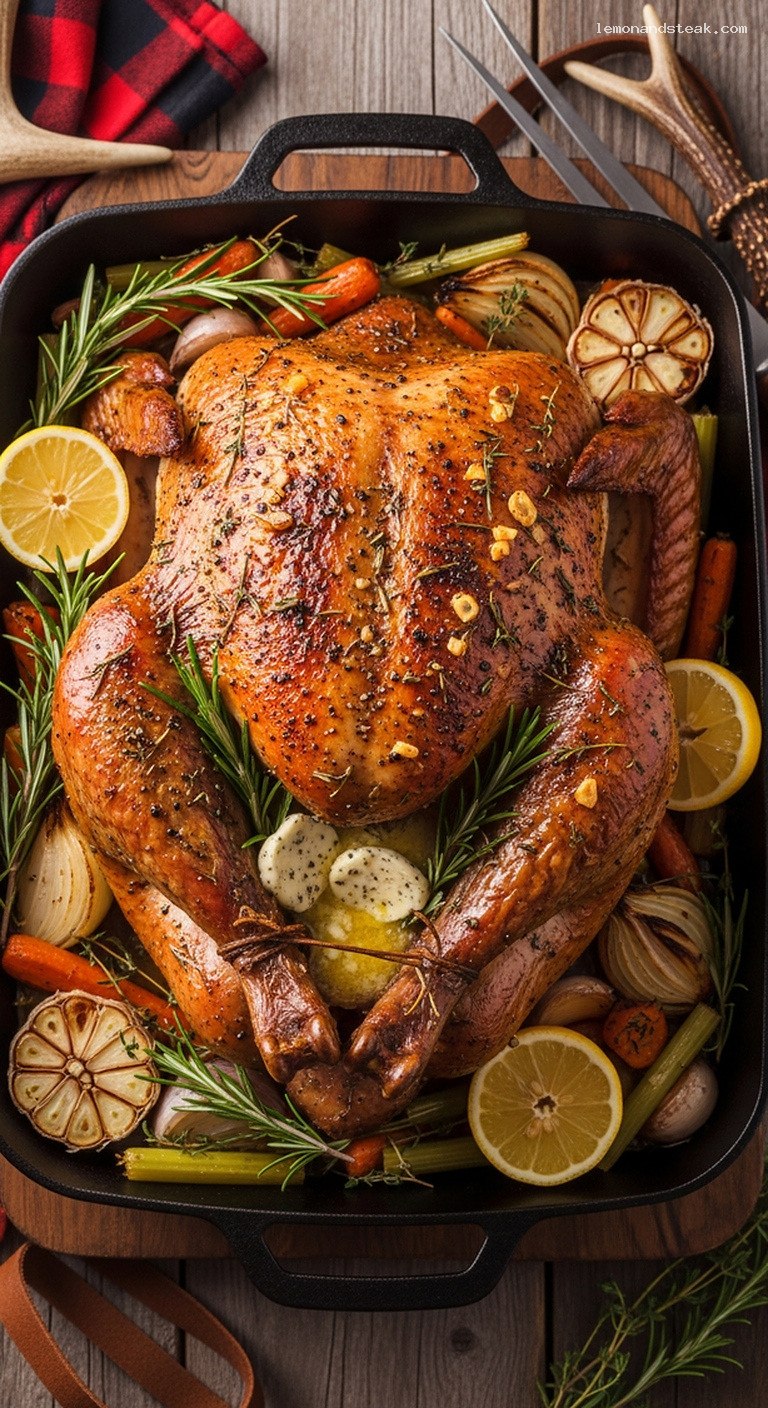
Quick Recipe Version (TL;DR)
Quick Ingredients
- 1 whole turkey, 12–14 lb (5.5–6.5 kg), thawed
- 3 tbsp kosher salt (for dry brine, optional)
- 1 1/2 cups (340 g) unsalted butter, softened
- 10 garlic cloves, minced
- 3 tbsp fresh rosemary, finely chopped
- 3 tbsp fresh thyme leaves, finely chopped
- 2 tsp freshly ground black pepper
- 2 tsp smoked or sweet paprika
- 2 lemons (zest of 1, plus wedges)
- 1 large onion, quartered
- 2 carrots + 2 celery stalks, chopped
- 2 cups (480 ml) low-sodium chicken or turkey stock
- 2 tbsp olive oil
Do This
- 1. Pat dry (and dry brine if desired): Remove giblets, pat turkey very dry, and optionally rub with 3 tbsp kosher salt and refrigerate uncovered 12–24 hours.
- 2. Make herb butter: Mix softened butter with garlic, rosemary, thyme, lemon zest, pepper, paprika, and 1 1/2 tsp salt (skip added salt if dry brined).
- 3. Prep turkey: Bring to room temp 45–60 minutes. Loosen skin over breast and thighs and rub half the herb butter under skin and inside cavity; rub remaining butter over outside.
- 4. Pan setup: Scatter onion, carrots, celery in roasting pan; pour in stock. Stuff cavity loosely with onion pieces and lemon wedges, then tie legs with kitchen twine.
- 5. Roast: Roast at 425°F (220°C) for 30 minutes, then reduce to 325°F (165°C) and roast 2.5–3.5 hours, basting occasionally, until 160°F (71°C) in breast and 165°F (74°C) in thigh.
- 6. Rest: Tent loosely with foil and rest 30–40 minutes before carving so juices redistribute.
- 7. Serve: Carve and serve with pan juices or make a quick gravy from drippings.
Why You’ll Love This Recipe
- Slow roasting and a rich herb-garlic butter give you incredibly juicy meat with minimal fuss.
- A quick blast of high heat at the start ensures beautifully browned, crispy skin.
- Simple, classic flavors from rosemary, thyme, garlic, and lemon please kids and adults alike.
- Built-in pan drippings make it easy to turn the roasting juices into a comforting gravy.
Grocery List
- Produce: 1 large onion, 2 carrots, 2 celery stalks, 1–2 heads garlic (10 cloves needed), 2 lemons, fresh rosemary, fresh thyme
- Dairy: 1 1/2 cups (340 g) unsalted butter
- Pantry: 1 whole turkey (12–14 lb / 5.5–6.5 kg), kosher salt, black pepper, smoked or sweet paprika, olive oil, 2 cups (480 ml) chicken or turkey stock, optional bay leaves and whole peppercorns for the pan
Full Ingredients
For the Turkey
- 1 whole turkey, 12–14 lb (5.5–6.5 kg), fully thawed, neck and giblets removed
- 3 tbsp kosher salt (for optional dry brine; see notes)
- 2 tbsp olive oil (for rubbing the pan and touch-ups on the skin if needed)
For the Herb-Garlic Butter
- 1 1/2 cups (340 g) unsalted butter, softened to room temperature
- 10 garlic cloves, very finely minced or pressed
- 3 tbsp fresh rosemary leaves, finely chopped
- 3 tbsp fresh thyme leaves, finely chopped
- Zest of 1 lemon (reserve the zested lemon for the cavity)
- 2 tsp kosher salt (reduce to 1/2–1 tsp if dry brining the turkey)
- 2 tsp freshly ground black pepper
- 2 tsp smoked or sweet paprika
For the Roasting Pan & Aromatics
- 1 large yellow onion, peeled and quartered (half for cavity, half for pan)
- 2 carrots, cut into 2-inch (5 cm) chunks
- 2 celery stalks, cut into 2-inch (5 cm) chunks
- 1 additional lemon, cut into wedges
- 2 cups (480 ml) low-sodium chicken or turkey stock
- 2 bay leaves (optional)
- 1 tsp whole black peppercorns (optional)
For Serving (Optional but Recommended)
- Extra fresh rosemary and thyme sprigs for garnish
- Extra lemon wedges
- Pan drippings and stock for gravy (if making gravy)
Step-by-Step Instructions
Step 1: Thaw and (Optionally) Dry Brine the Turkey
If your turkey is frozen, thaw it in the refrigerator in its original packaging. Plan on about 24 hours of thawing for every 4–5 lb (1.8–2.3 kg) of turkey. For a 12–14 lb bird, this typically takes 3–4 days. Never thaw at room temperature.
For extra-juicy, well-seasoned meat, dry brine the turkey: Pat the completely thawed turkey dry with paper towels, inside and out. Sprinkle 3 tbsp kosher salt evenly over the entire surface of the bird, including lightly inside the cavity. Place the turkey breast-side up on a rack set over a rimmed baking sheet. Refrigerate, uncovered, for 12–24 hours. This helps season the meat all the way through and dries the skin for better crisping. If you skip the dry brine, you will season more aggressively with the herb butter later.
Step 2: Make the Herb-Garlic Butter
About 1 hour before roasting, take the butter out of the fridge so it softens. In a medium bowl, combine the softened butter, minced garlic, chopped rosemary, chopped thyme, lemon zest, kosher salt, black pepper, and paprika. Mix thoroughly with a spatula or fork until the herbs and garlic are evenly distributed and you have a smooth, fragrant paste.
Taste a tiny dab (it will be salty and intense, as it is seasoning the whole turkey) and adjust salt or pepper if needed. Set aside at room temperature so it stays spreadable. If your kitchen is very warm and the butter starts to melt, place it in the refrigerator for 5–10 minutes to firm up slightly.
Step 3: Bring the Turkey to Room Temperature and Prep the Pan
Remove the turkey from the refrigerator 45–60 minutes before you plan to roast. This takes the chill off the meat and helps it cook more evenly. Pat the turkey very dry again with paper towels, especially the skin. Moisture on the surface will steam instead of crisp.
Preheat your oven to 425°F (220°C) with a rack in the lower third position. Lightly rub the bottom of a large roasting pan with olive oil. Scatter the chopped carrots, celery, and half of the onion wedges evenly in the pan. Pour in the chicken or turkey stock and add the bay leaves and whole peppercorns if using. Set a roasting rack over the vegetables, if you have one; if not, the vegetables themselves can act as a rack to lift the turkey slightly.
Step 4: Season the Turkey with Herb Butter and Aromatics
Place the turkey breast-side up on a clean work surface or cutting board. Gently loosen the skin from the breast meat by sliding your fingers between the skin and the meat, starting at the neck cavity and working your way down toward the legs. Be careful not to tear the skin. Loosen as much skin as you reasonably can over the breasts and upper thighs.
Using your hands or a spoon, slide about half of the herb-garlic butter under the skin, pressing it directly onto the meat. Smooth the skin over the butter to spread it out as evenly as possible. Rub some butter inside the cavity as well. Spread the remaining herb butter all over the outside of the turkey, including legs and wings. If you dry brined, the surface will already be salted; focus more on distributing the herbs and fat, not extra salt.
Stuff the cavity loosely with the remaining onion wedges and a few lemon wedges. Do not pack it tightly; air circulation inside helps the bird cook evenly. Tuck the wing tips under the body to prevent burning. Tie the legs together with kitchen twine for a compact shape that roasts more evenly.
Step 5: Start with High Heat for Crispy Skin
Transfer the buttered and trussed turkey, breast-side up, onto the roasting rack over the vegetables in the prepared pan. Brush any remaining herb butter over the top. Drizzle or lightly brush the skin with up to 2 tbsp olive oil if the butter layer looks thin in any spots; this helps browning.
Place the turkey in the preheated oven at 425°F (220°C) and roast for 30 minutes. This high-heat blast jump-starts browning and begins to render the fat under the skin, setting you up for a deeply golden, crispy finish.
Step 6: Slow Roast Until Juicy and Tender
After 30 minutes, reduce the oven temperature to 325°F (165°C). Without opening the oven too often, roast the turkey for an additional 2 1/2 to 3 1/2 hours, depending on the size of the bird. As a rough guide, total roasting time is about 13–15 minutes per pound (28–33 minutes per kg) including the initial high-heat stage.
Every 45 minutes or so, baste the turkey by spooning pan juices over the breast and legs. If the pan looks dry, add another 1/2–1 cup (120–240 ml) stock or water. Begin checking the internal temperature about 45–60 minutes before you think it will be done. Insert an instant-read thermometer into the thickest part of the thigh (without touching bone) and the thickest part of the breast:
- Breast: 160°F (71°C)
- Thigh: 165°F (74°C)
If parts of the turkey (usually the breast or wing tips) are browning too quickly before the meat is done, tent just those areas loosely with foil and continue roasting until the correct temperatures are reached.
Step 7: Rest, Carve, and Serve
Once the turkey reaches 160°F (71°C) in the breast and 165°F (74°C) in the thigh, carefully remove it from the oven. Lift the turkey onto a large platter or cutting board with a lip to catch juices. Tent it very loosely with foil and let it rest for 30–40 minutes. Resting is crucial: the internal temperature will rise slightly, and the juices will redistribute, giving you moist slices instead of dry meat.
While the turkey rests, you can skim fat from the pan drippings and use the flavorful liquid to make gravy, or simply pour some of the defatted juices into a small pitcher for serving at the table.
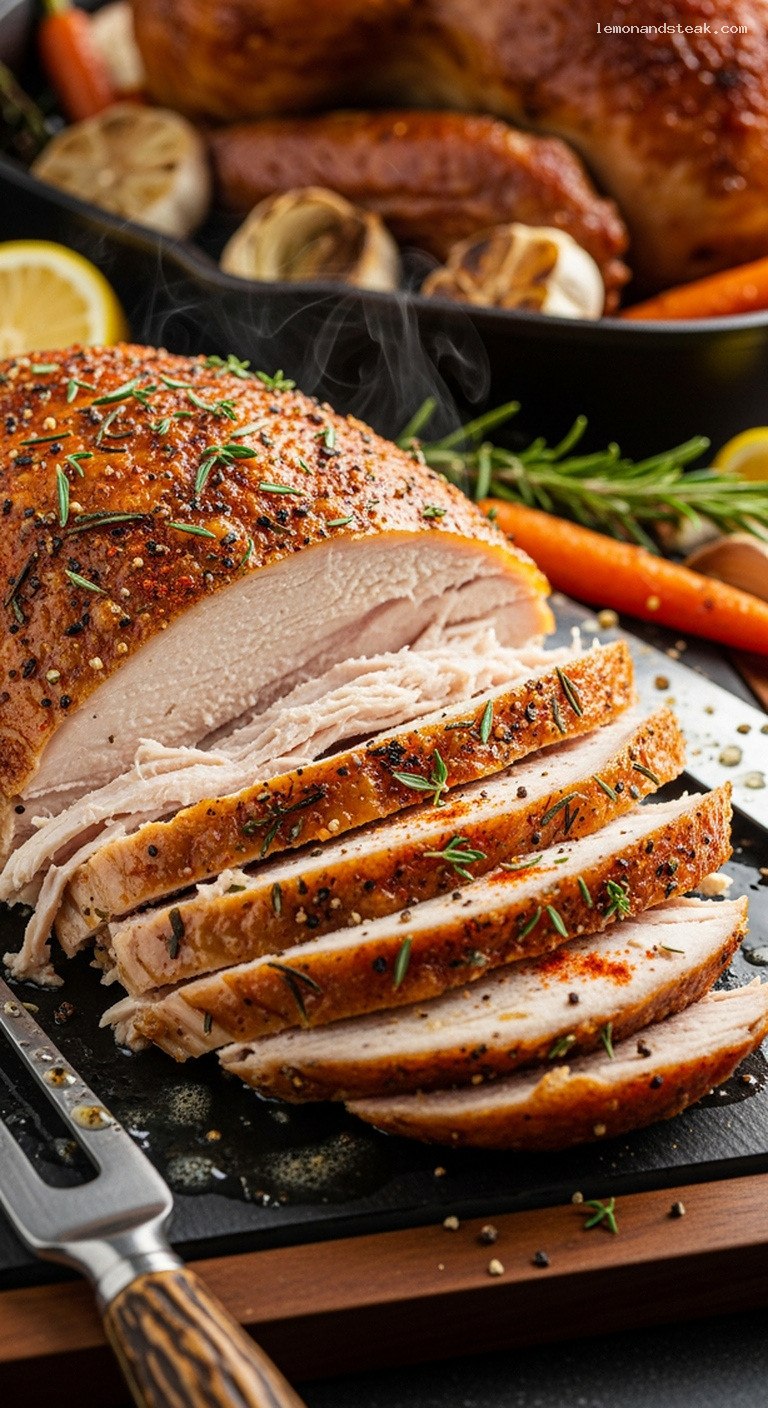
To carve, remove the legs and thighs first, then the wings, and finally slice the breast meat against the grain into even slices. Arrange the meat on a warm platter, garnish with fresh rosemary and thyme sprigs and lemon wedges, and spoon a little warm pan juice over the top just before serving. Serve immediately with your favorite sides.
Pro Tips
- Dry brining pays off: If you have the time, the 12–24 hour dry brine dramatically improves seasoning and juiciness, especially in the breast meat.
- Start cold, finish hot for gravy: After removing the turkey, place the roasting pan over medium heat and deglaze with extra stock or a splash of white wine to create a rich base for gravy.
- Use a thermometer, not the clock: Oven temperatures and turkey sizes vary. An instant-read thermometer is the most reliable way to avoid under- or overcooking.
- Let the skin dry out: Patting the turkey very dry (and refrigerating uncovered for the dry brine) is key to crisp, glassy skin.
- Rotate if needed: If your oven has hot spots, rotate the pan 180 degrees halfway through roasting to promote even browning.
Variations
- Garlic-Lemon Butter Only: Skip the rosemary and thyme and double the garlic and lemon zest for a brighter, more citrus-forward turkey.
- Herb-Rub with Olive Oil: Replace half the butter with 3–4 tbsp olive oil for a slightly lighter version with a more pronounced herb flavor and a slightly leaner finish.
- Smoky Paprika & Herb Turkey: Increase smoked paprika to 1 tbsp and add 1 tsp ground cumin to the herb butter for a deeper, gently smoky flavor that still pairs well with classic sides.
Storage & Make-Ahead
Leftover turkey keeps well and is excellent for sandwiches, soups, and casseroles. Cool any leftovers to room temperature within 2 hours of roasting, then store in airtight containers in the refrigerator for up to 4 days. For longer storage, freeze sliced meat in freezer-safe bags or containers (removing as much air as possible) for up to 2–3 months. Reheat gently, covered, in a 300°F (150°C) oven with a splash of stock to keep the meat moist.
To work ahead, you can dry brine the turkey 1–2 days in advance and make the herb butter up to 3 days ahead, storing it covered in the refrigerator. On roasting day, bring the butter to room temperature so it is spreadable. You can also chop the vegetables and aromatics a day ahead and keep them in sealed containers in the fridge, making the actual roasting day much more relaxed.
Nutrition (per serving)
Approximate values per serving, assuming 12 servings from a 12–14 lb turkey and including skin and some herb butter (not including gravy or sides): about 460 calories, 30 g protein, 34 g fat (of which about 16 g saturated), 4 g carbohydrates, 0 g fiber, 130 mg cholesterol, and 520 mg sodium. These numbers will vary depending on the exact size of the turkey, how much skin and butter are eaten, and any additional sauces or sides served.
Leave a Reply